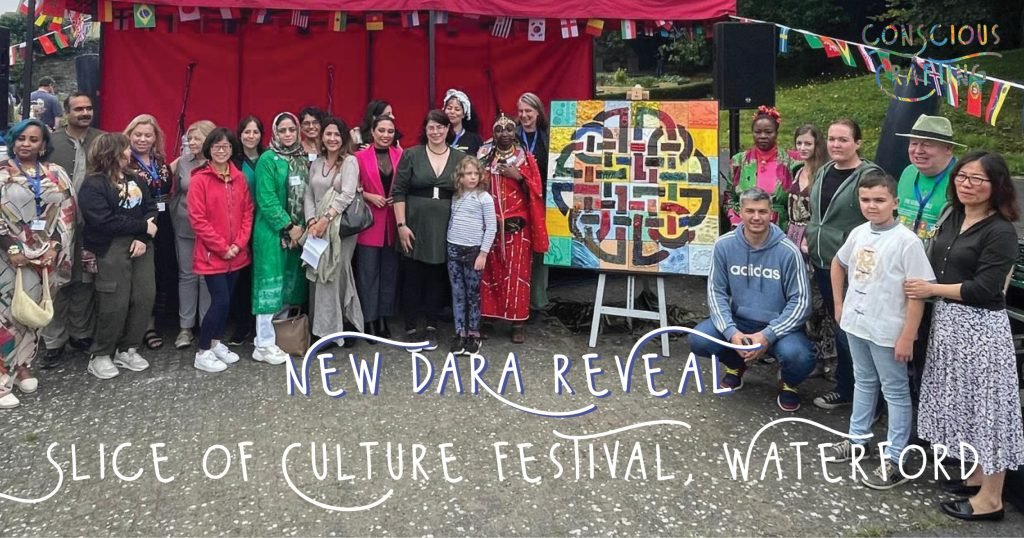
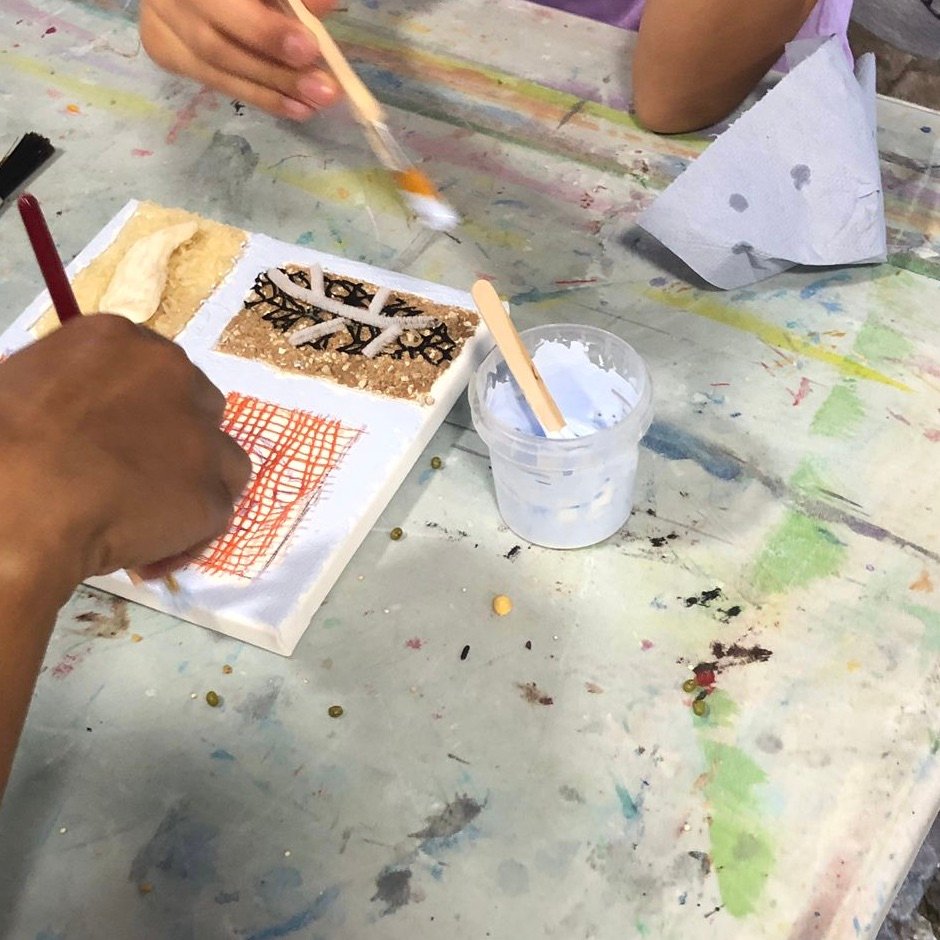
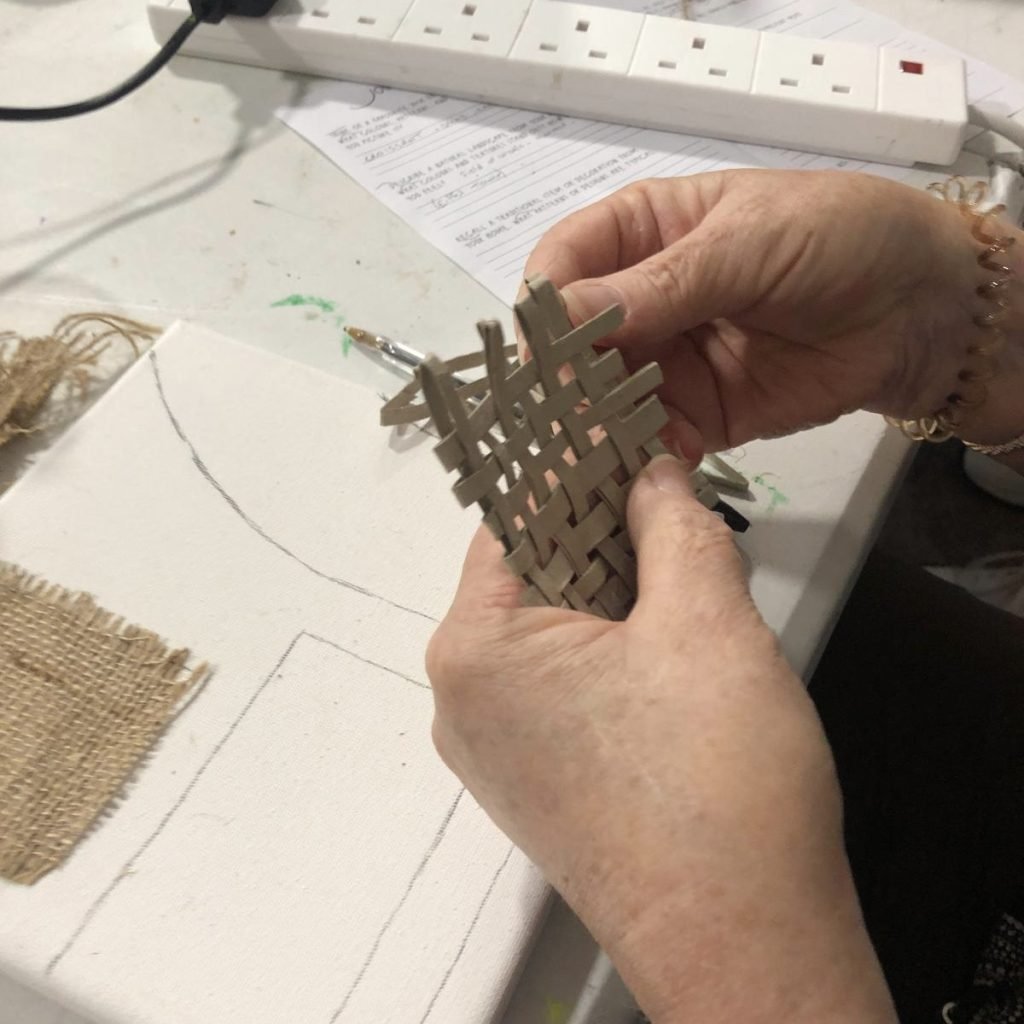
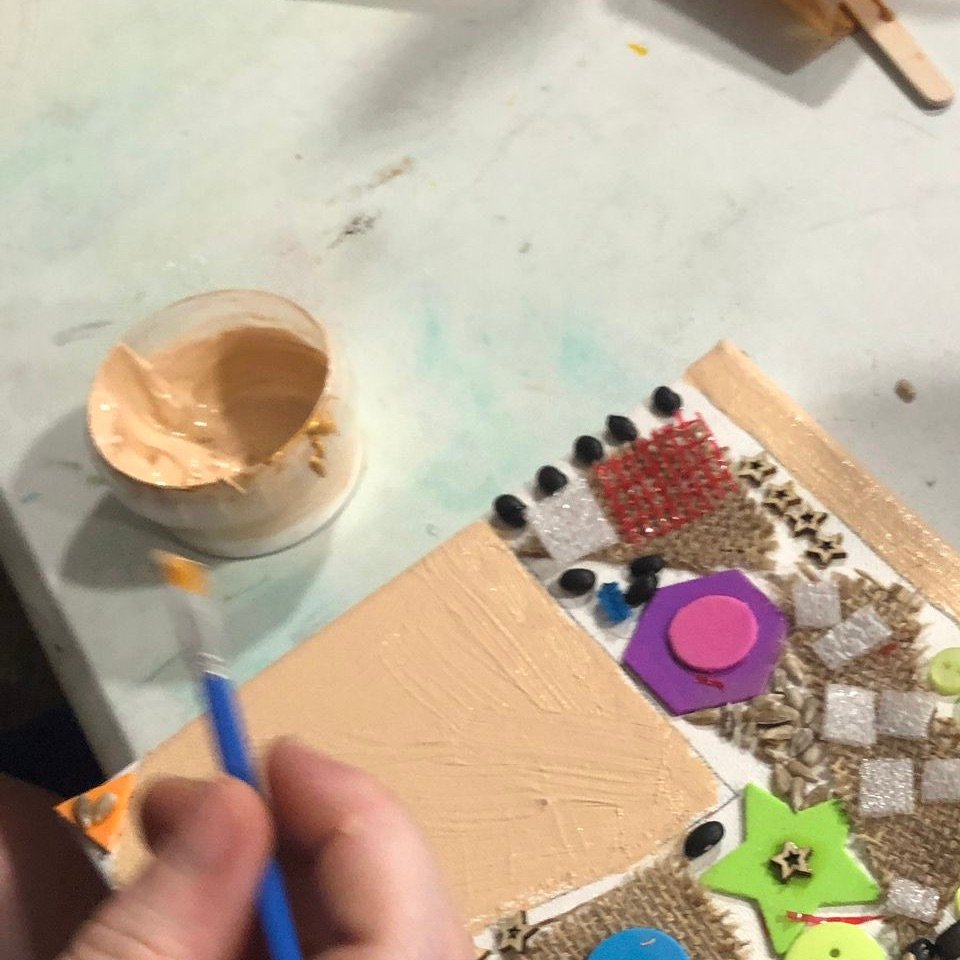
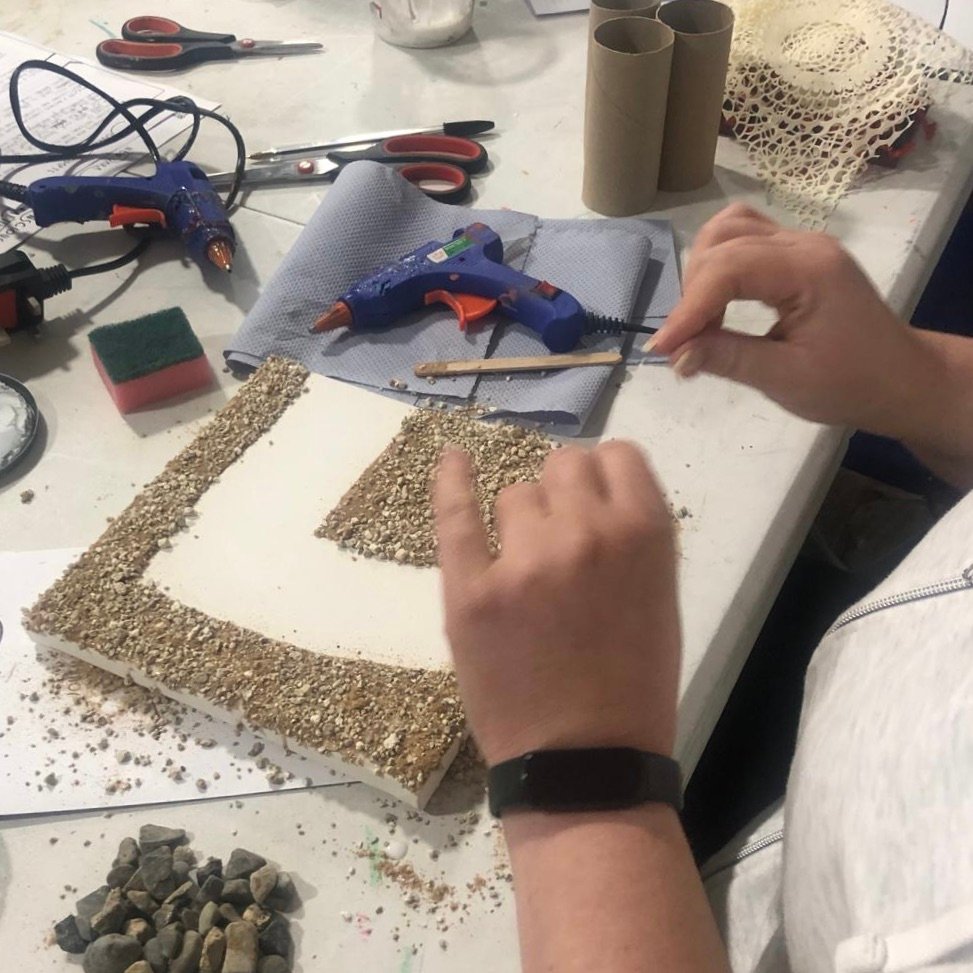
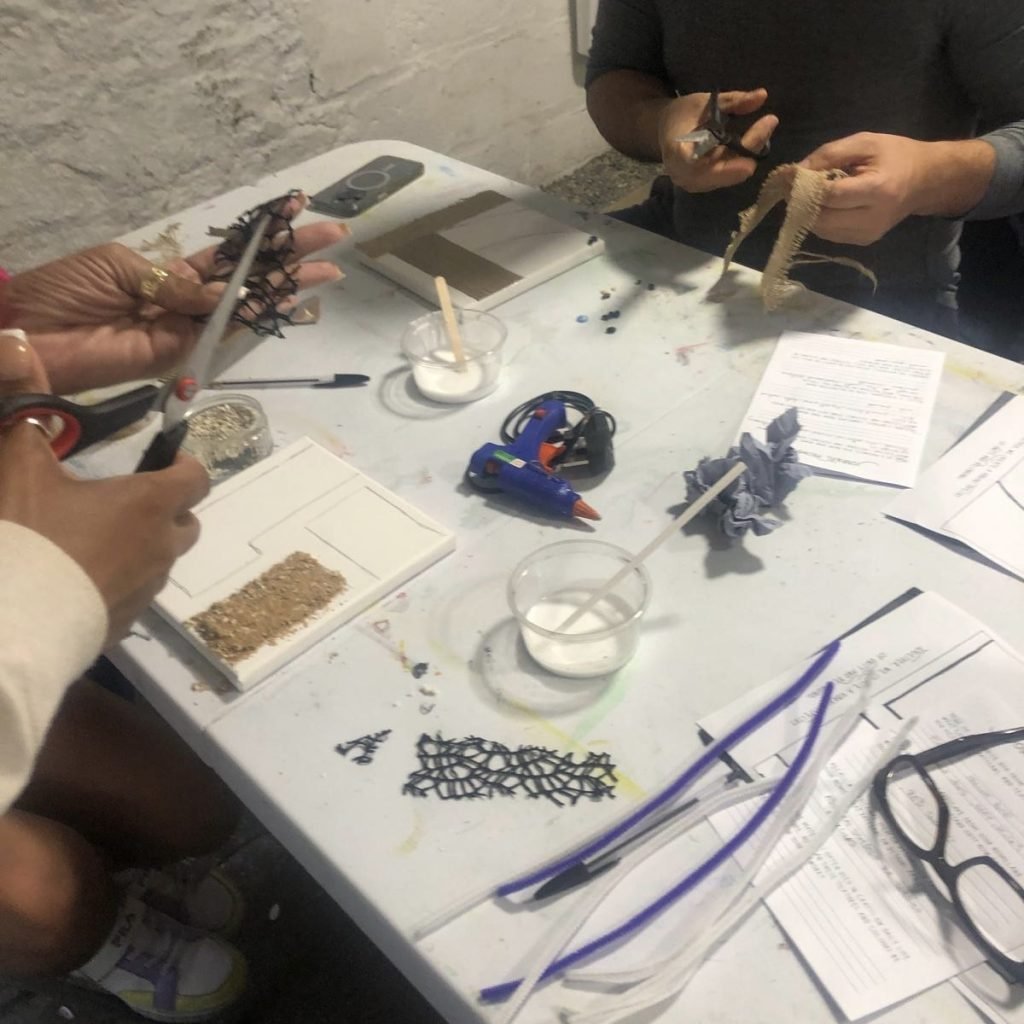
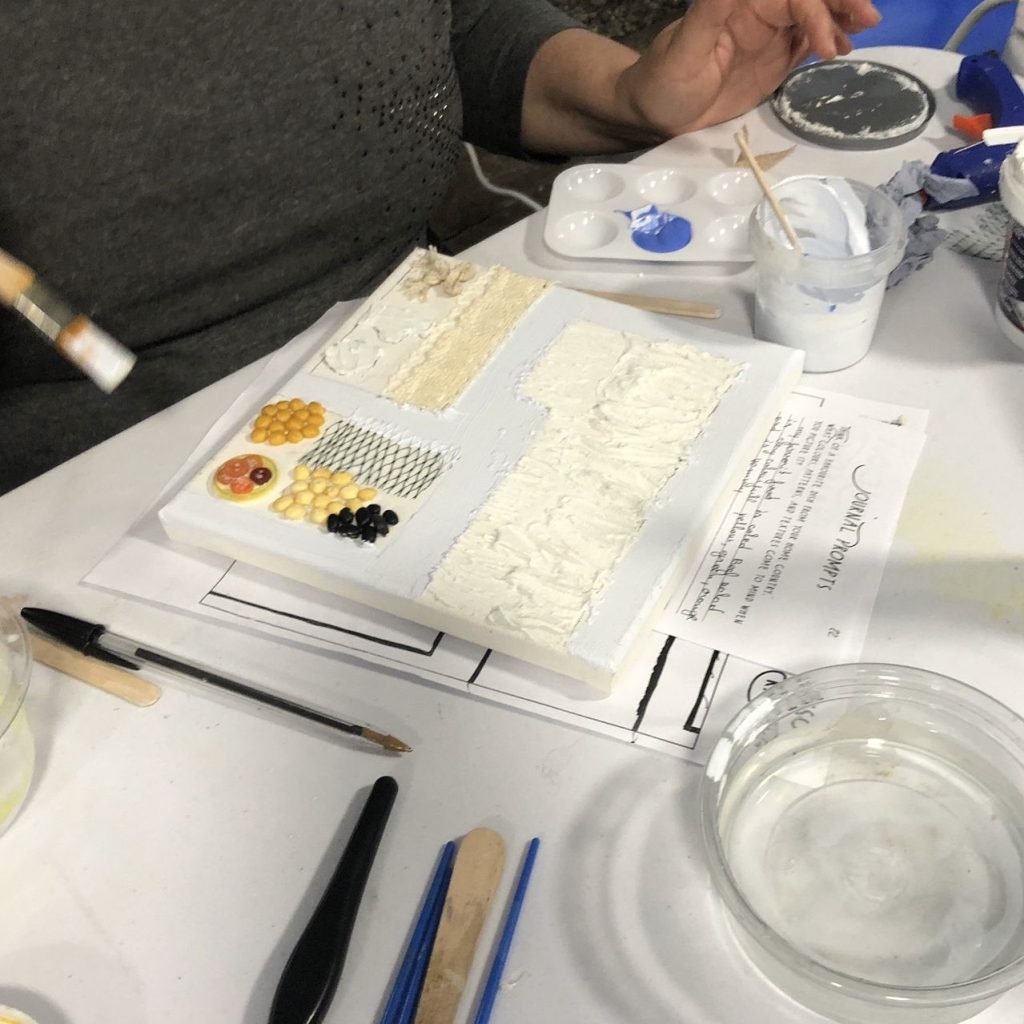
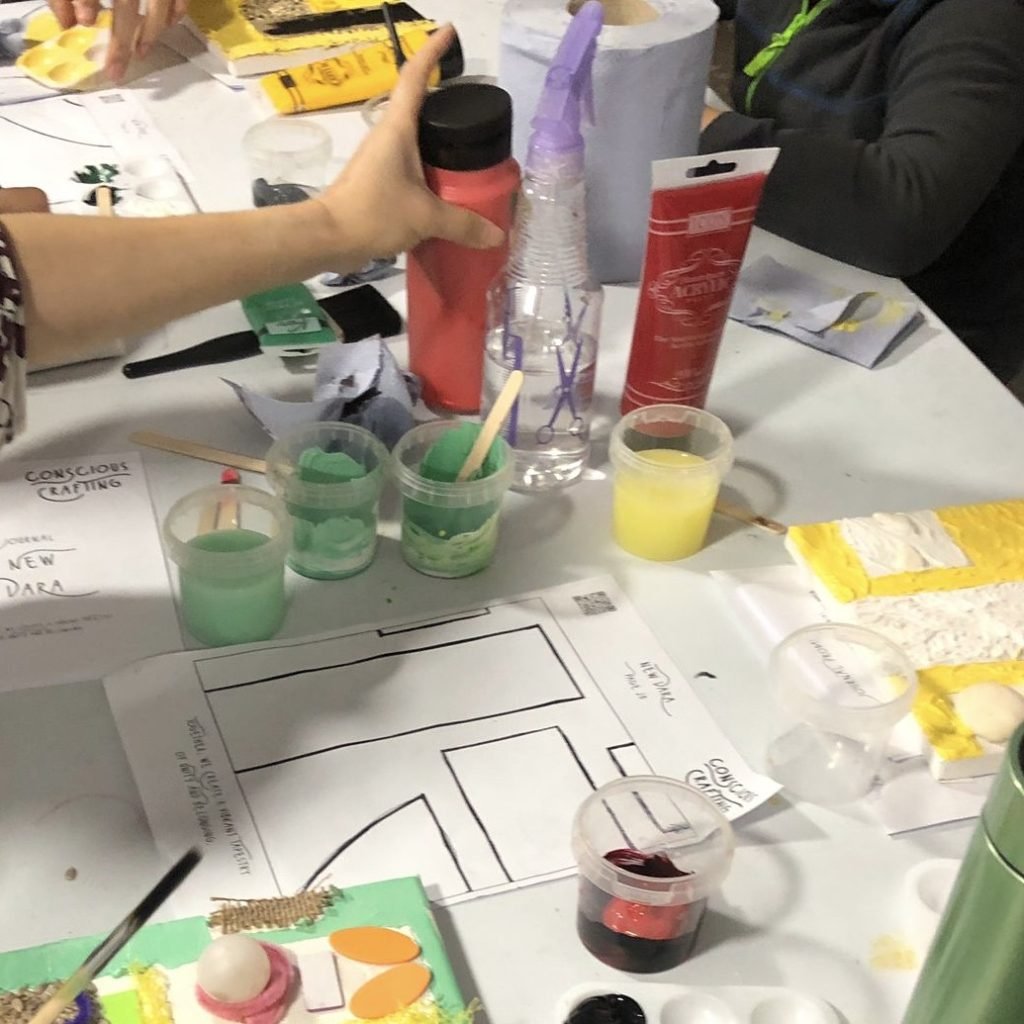
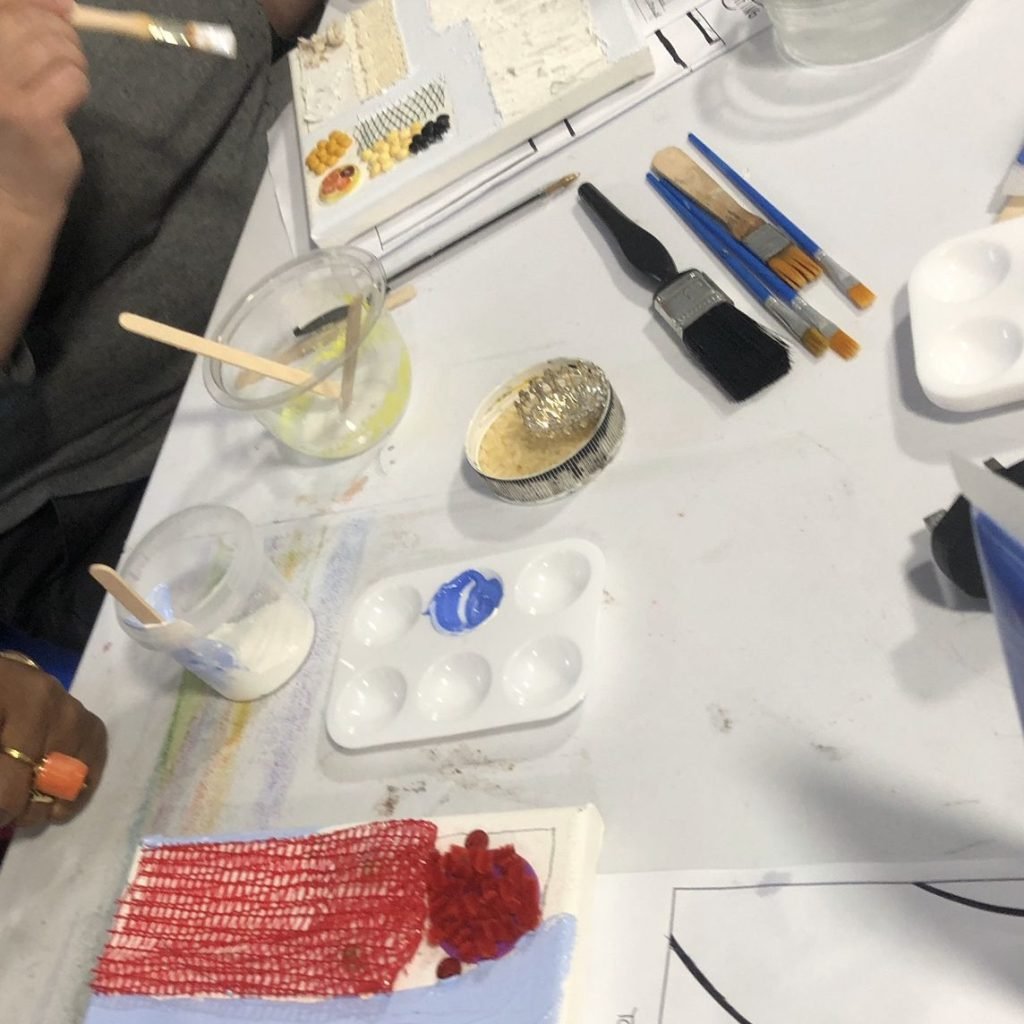
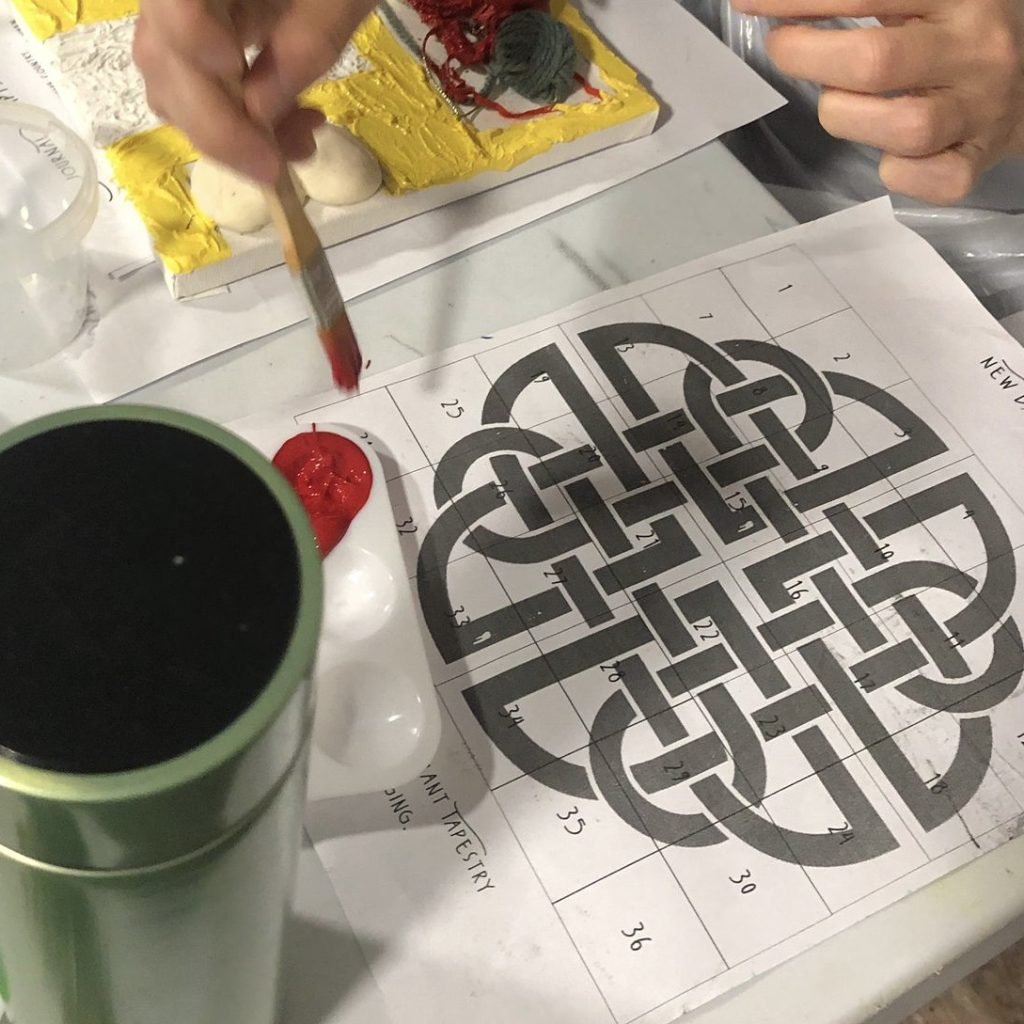
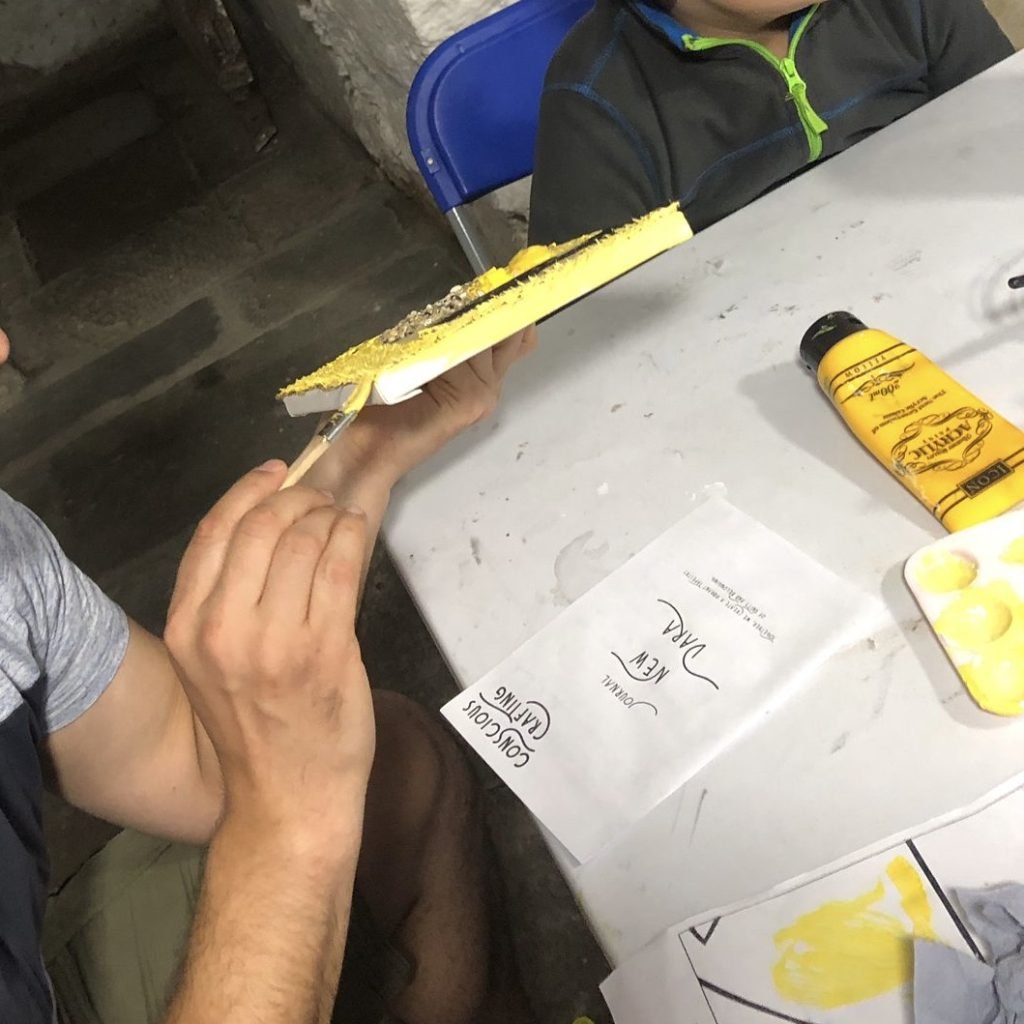
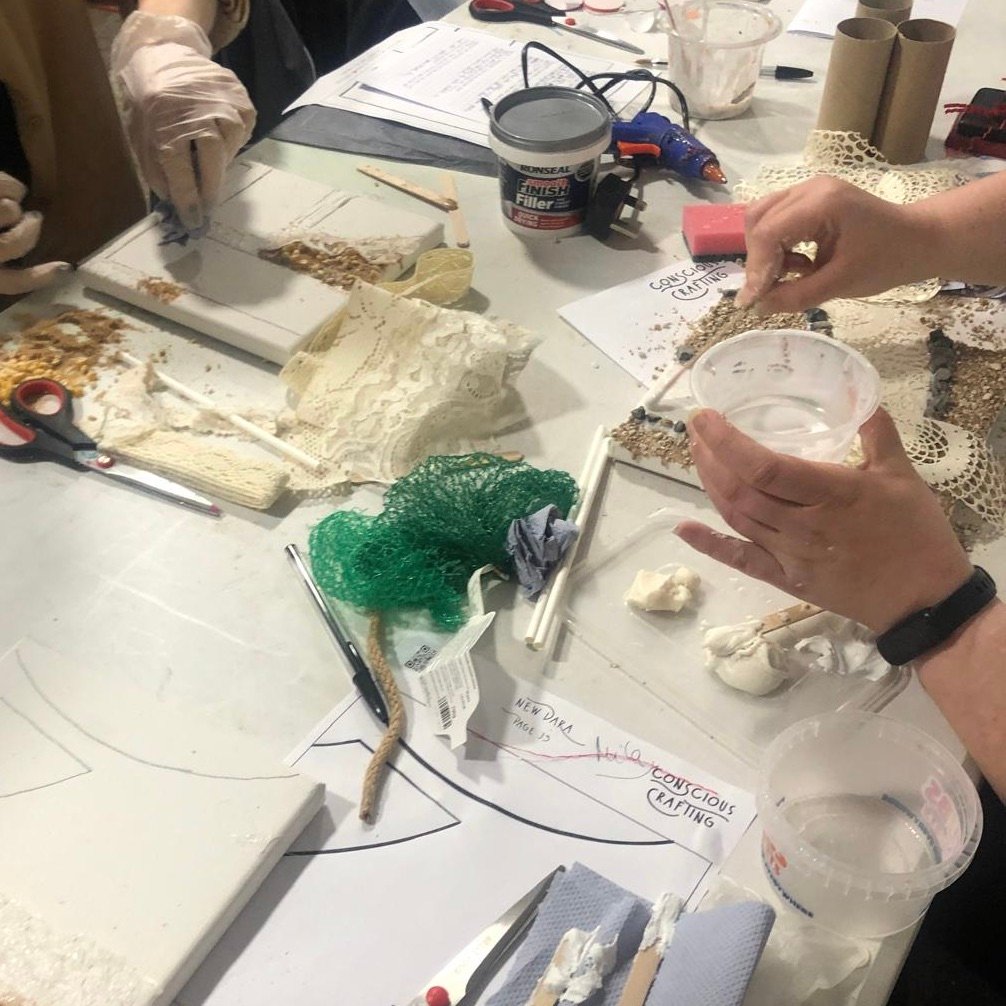
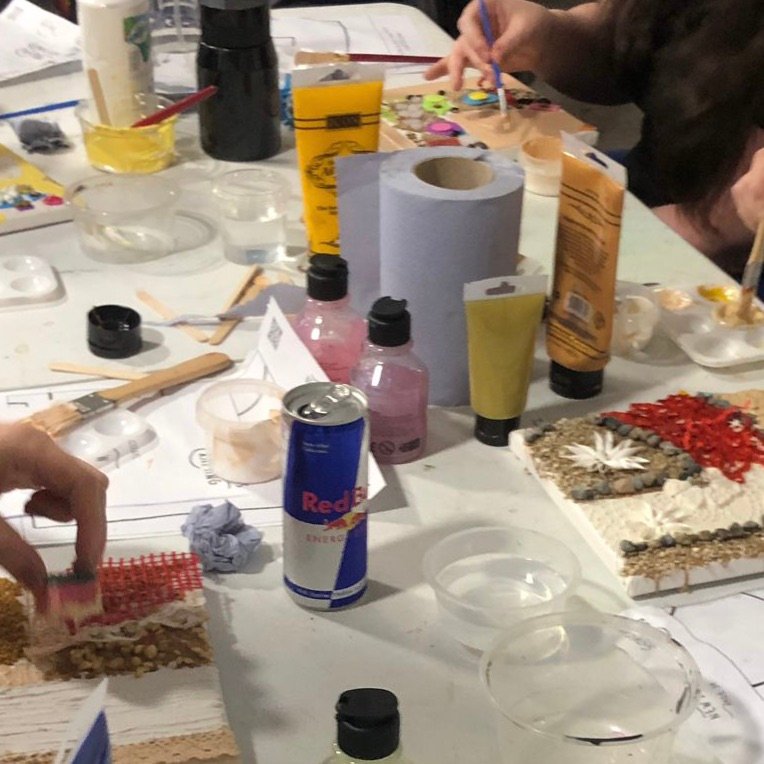
This vibrant, collaborative artwork, created by 41 people from 24 different countries, forms the shape of the Dara Knot, an ancient Celtic symbol representing strength and unity. Commissioned by the Waterford New Community Network, this patchwork of personal stories, with each panel a colourful reflection of the participant’s unique cultural heritage, is coming together to symbolise a collective journey.
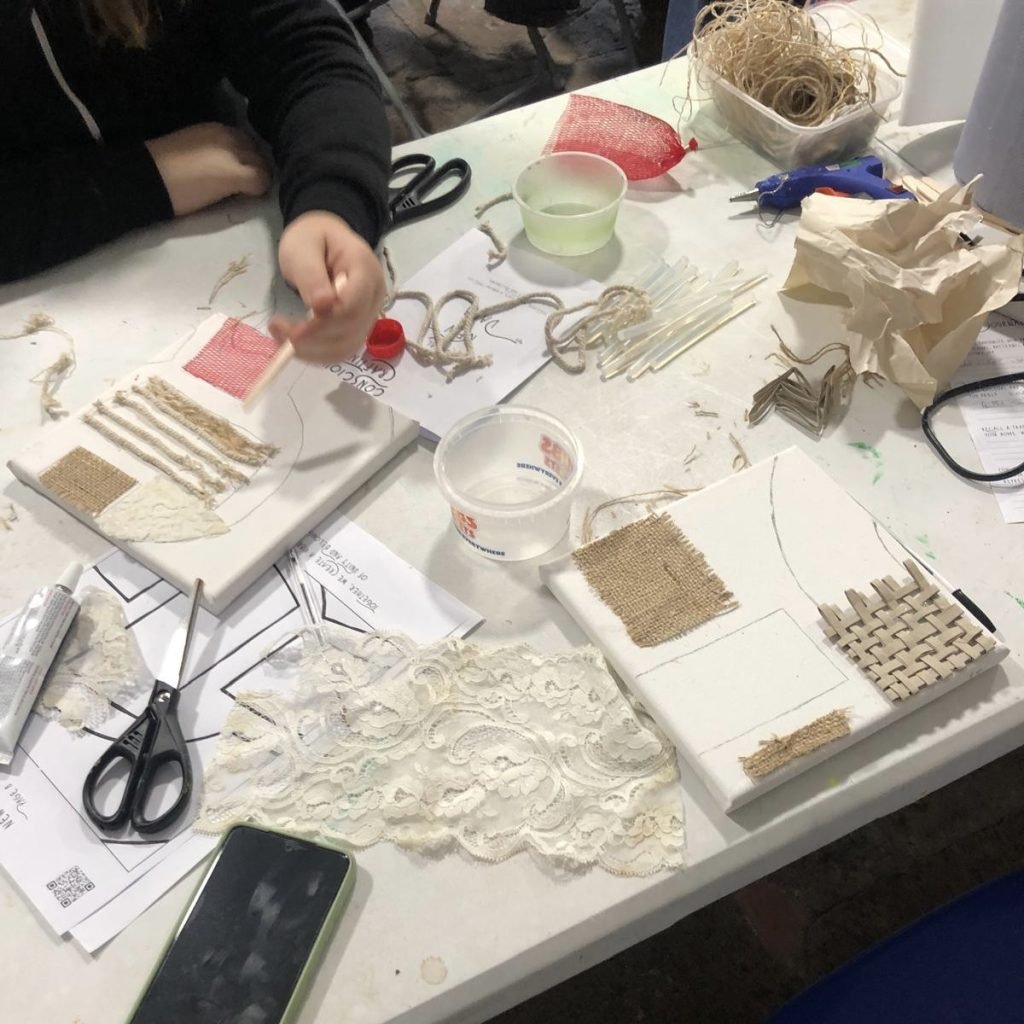
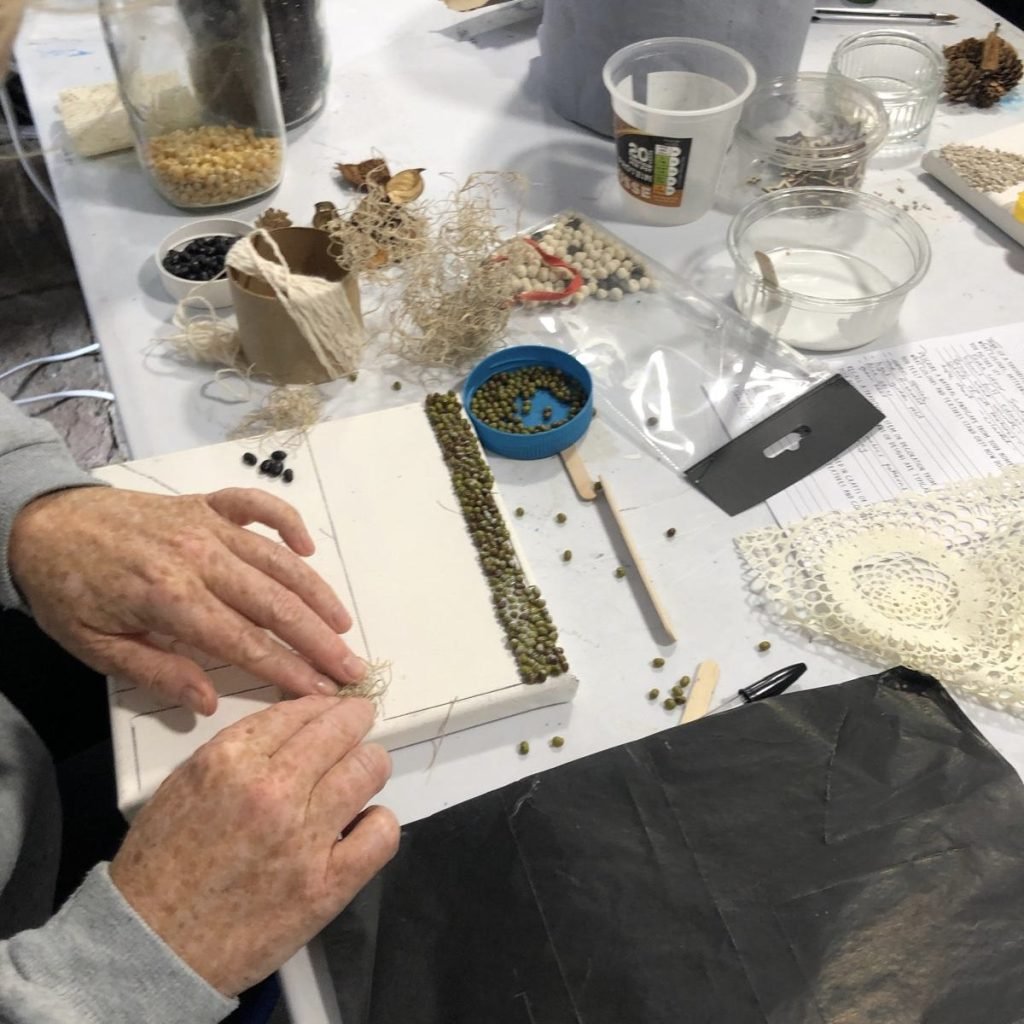
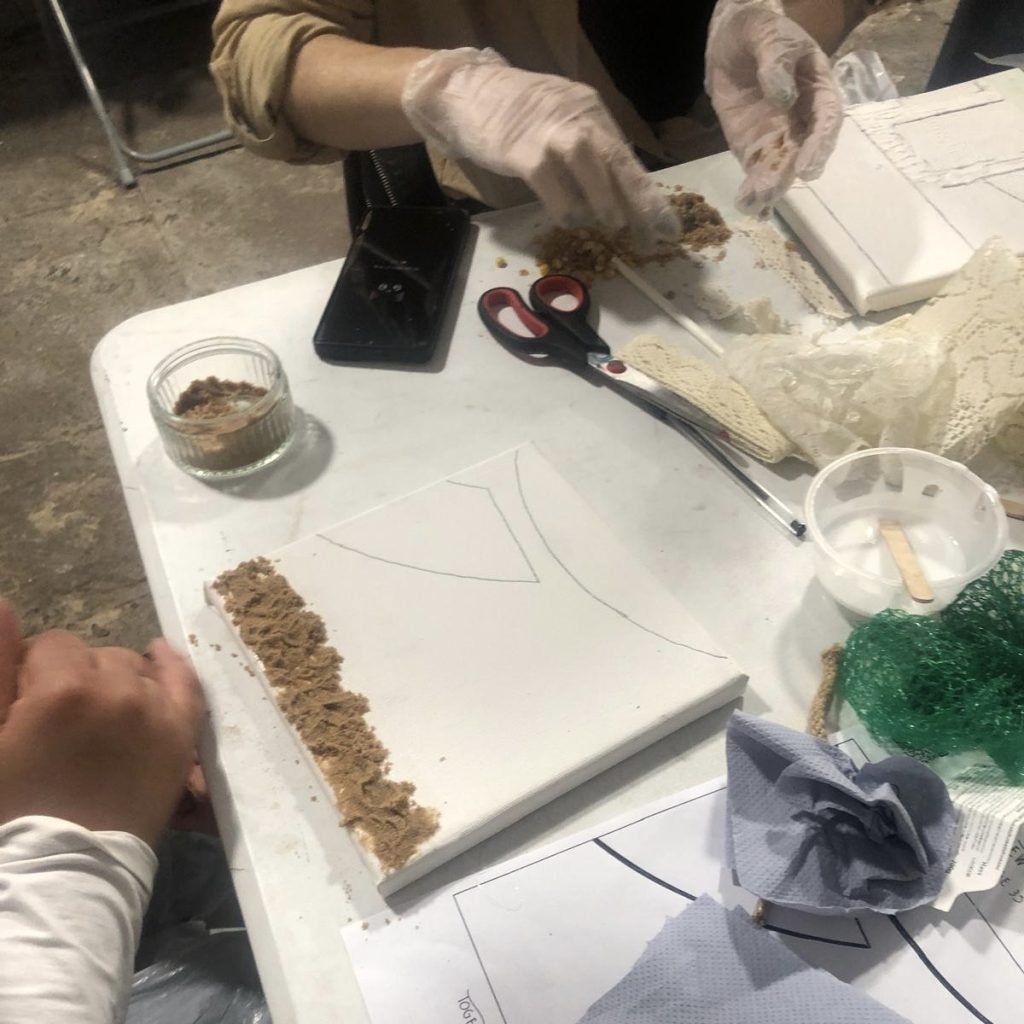
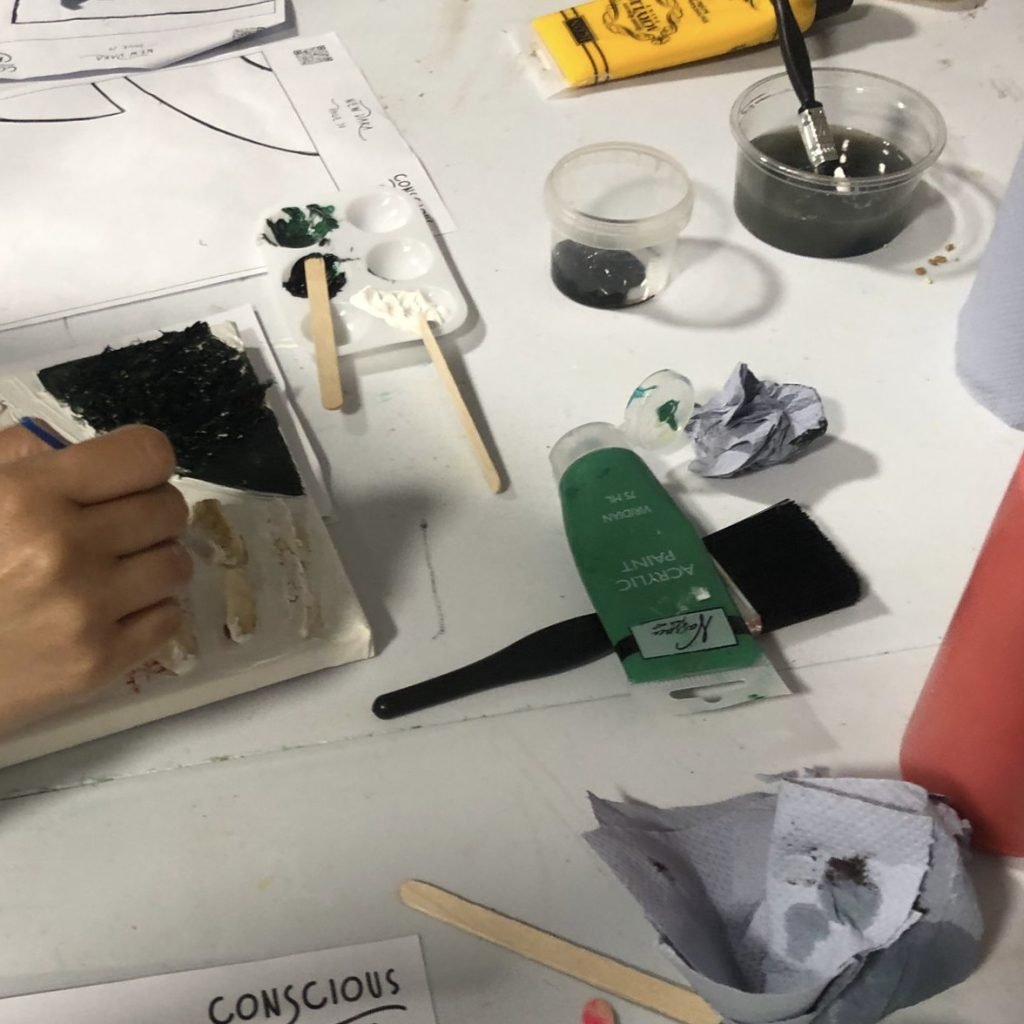
In the first session, participants were guided to explore memories of their native homes—colours, textures, and landscapes that remind them of their roots. In the second session, they were given strict instructions on how to paint within a shared design, embodying the process of blending their individual identities with the cultural customs, opportunities and challenges of their new home in Ireland.
This artwork is more than just a visual expression—it’s a metaphor for life in a new society, where the participants are invited to carry forward their own identity while adapting to a new cultural landscape. The Dara Knot represents the intertwining of cultural heritages, where no single thread is lost, but together they create a stronger, unified whole.
This piece will be unveiled as part of the Slice of Culture Festival, a testament to the power of shared creativity and the beauty of unity in diversity. Through this process, the artwork becomes a living symbol of what it means to be part of something bigger, where each contribution, rooted in its origin, adds to the vibrancy and strength of the whole.
Panel 1 Samantha Kleinschmidt (South Africa)
The abundant and vibrant natural wealth of Africa, the Motherland.
Panel 2 Geraldine Reorizo (Philippines)
My artwork represents the richness and vibrancy of our culture and our country.The Philippines with its tropic weather, surrounded with blue seas, made it the haven for rich flora and fauna, with our 7,641 islands and colonized by different groups, made Philippines a vibrant mixed culture influenced by western and eastern cultures. And that’s what made Philippines what it is today. A country rich in textures as what my artwork symbolizes.
Panel 3 Senthil Kumar Ramasamy (India)
My artwork represents chicken curry and rice with radish, salad of curry with spices, and a few grains.
Panel 4 Danylo Luand (Ukraine)
I painted flowers as one of the symbols of Ukrainian culture. As I painted, memories from that atmosphere and place stayed in my mind forever. The half I painted is filled with the Ukrainian flag because music is an incredible thing in the world that can unify people with sound that touches the heart.
Panel 5 Eskelien Lambrey (Belgium)
A bright orange sunset on the sandy beach of Ostend; a soft carpet of seaweed, coming and going with the tides. A land texture of lace symbolizes Bruges, the town where I was born, with cobblestone soil – the coffee beans texture symbolizes the smell of coffee in my grandmother’s kitchen. Belgium will always be where my roots are, my family, my friends.
Panel 6 Monica Rudi Kent (Italy)
My artwork represents the warmth of my country, the colours of the sun, and the sense of people.
Panel 7 Maria-Assunta Lawton (Canada)
As we come into the autumn, the images of Canada that came to mind were of the rich, rustic colours of the fall foliage there. As I will return next month to celebrate Thanksgiving, my thoughts turned to the harvest season. I used natural textures to evoke that – grains, paper, acorns, etc. Yellow, like the golden hue of wheat, was a natural choice for painting over it.
Panel 8 Csilla Czelvikker (Hungaria)
During the meditation, as I thought about my hometown, I could feel the warm breeze from Lake Balaton and see the bright blue sky of summer. I could smell the earthy scent of the garden where, as a child, I would pick fresh vegetables—organic, of course—like little carrots, peas, sorrel, and all the delicious fruits growing there. The white I saw was the snow in winter, and the red was the vibrant paprika powder, our main spice, with its distinct aroma and smooth texture.
Panel 9
Katarina (Inna) Kaluder (Croatia)
My art was inspired by lace on traditional festive clothing from the Vinkovci area, called ‘zlatovez’. The background is inspired by old Croatian houses and their textures. Darker parts are inspired by dried spicy meat (Kulen) and a wooden well specific to Eastern Croatia (đeram), a region known for its vast golden fields where corn and wheat grow.
Panel 10
Anne-Françoise Power (France)
My artwork represents the sense of freedom in my country (birds) and the richness of the land : a field of wheat, a bag for the flour, harvest, bread, and a heart for love, with cork for the wine.
Panel 11 Wren McCreadie (South Africa)
The texture represents the beadwork (dark) and the beaches (light). The dark colours were chosen with the landscape (sand and mineral rock mountains such as Table Mountain) in mind.
Panel 12
Daria Gnatchenko (Ukraine)
This art reminds me of my country. My story is: wherever you are, you should always remember your homeland.
Panel 13
Flor O Mahony (Ireland)
“Stone walls and the grass is green” (a line from the N17 song). I grew up on a farm in West Cork, so stone ditches, briars, hawthorn, etc. was the landscape that surrounded me. The mantra from the agricultural advisors to progressive farmers was “Reclaimation” so farmers could create more land for growing more grass to feed more cattle. So picking stones and making land drains was a feature of my summer holidays as a child and teenager. My father spent most of his life working at reclaiming land! Now our home farm is 95% grassland. The grey represents the rain, which we get in many types.
Panel 14
Abigail Thomas and Margareth (America)
Growing up, I spent a lot of time in the forest and mountains, so I was primarily inspired by the scenes and experiences of nature. The top section represents the views of the Blue Ridge Mountains on humid summer days. The left is a stream or river with a rocky bank. The centre shows a woodland scene with trees and the forest floor covered in crunchy autumn leaves. The right section is of a summer thunderstorm with heavy sheets of rain. Finally, the background represents the iconic pumpkin pie traditionally served at Thanksgiving holiday meals.
Panel 15
Olha Soloshenko and Maria (Ukraine)
My artwork represents the variety of Ukrainian nature.
Panel 16
Kasia Cichy (Poland)
Things that I miss sometimes; very bright days, woods.
Panel 17
Sophie Sarba & Mara Matiut (Romania)
The bushes and leafy greenery that grows across the country, the colours that envelop delicious traditional food, traditional beaded bracelets, the lace on our traditional clothing.
Panel 18
Soledad Pérez Gallo (Argentinia)
The water of rivers, lakes, and the ocean. The brown is the main colour in Patagonia. I made it with grey and a bit of green, but if I think about my landscape, my first thought is brown. The yellow is because, even though it’s a cold region, most of the time we have a clear sky, and I kept it. The texture in the yellow represents the wind, a huge part of life in Patagonia.
Panel 19
Rita Lima (Brazil)
I included some elements that remind me of Brazil. Seeds, a country rich in types of food, ocean, beaches, blue sky, and sand.
Panel 20
Michelle Kalkwarf (South Africa)
My artwork represents the warm earthy textures of Africa: geometric beads, natural fabrics. The colours of a blazing fire under the African sky. Sizzling traditional sausage we call boerewors cooked on hot coals. The land and its people are warm and rich with vibrancy. My gran, who was born in Ireland, grew up in South Africa, and this is dedicated to her in thanks for my new opportunity to live in her birthplace—another loop in our family’s migration story.
Panel 21
Ann Kavanagh Drennan and Croiadh (Ghana)
My inspiration comes from the colours and textures of the food I miss and from the red soil where all our fresh produce grows. Also from patterns in our traditional textiles, furniture and decorations.
Panel 22 Cipriana Matiut (Romania)
I tried to show part of the beautiful green forests and mountains, and a bit of the artisanal heritage of Romania.
Panel 23
Tanja Pöthig (Germany)
Chestnuts, forests, crafts, mussels, and sunflower fields.
Panel 24
Dumitru Brinza and Eli (Moldova)
My artwork represents Moldovan culture with its carpets, food, and more. The dark tones represent the land of Moldova, rich in light. (RO) Denița este ploaia mic tradițional pentru a reprezenta tot ce este Moldova. Am încercat să pun cele mai importante lucruri ce îmi vine in cap. Sper că vă place rezultat final.
Panel 25
Anna Masesa (Tanzania)
I chose yellow and black because yellow represents the sun, also used to signify wealth and prosperity. Black represents the people (African people).
Panel 26
Karina Garbera (Poland)
A lot of flowers, poppies, cornflowers, dirt paths, rocky roads, the best memories of childhood spent in the countryside, harvests, making your own bread, butter, collecting eggs and vegetables from the garden. It seems like hard work but very satisfying and I will always miss that when I think about my childhood in Poland.
Panel 27
Osas Usideme (Nigeria)
Royalty is upheld in high esteem with the red colours depicting coral beads of a queen with authority. The leaf green represents pure fertility, the richness of the land. The burnt red is emblematic of Nigerians, particularly in the popular Jollof rice, which is served at every event—marriage, burial, naming, and festivals. It cannot be compared to Ghana Jollof.
Panel 28
Hellen Kang-Griffith(China)
China is a huge country with more than 7,000 years of history. My artwork presents the history of war, blood, struggle, as well as prosperity, thrive, hard work, hope, and love. That’s why I have dark red, blood red, and black red representing the history. I also use light green as a background to represent harmony and flow. The dark green symbolizes the rice field, Chinese New Year celebration, and Canton.
Panel 29
Sara Karam (Lebanon)
It is inspired by my childhood memories at my grandparents’ house in the countryside. Most notably, all the delicious food and bread that my grandma and aunt prepared. Also, the lace and sets used on coffee tables and sideboards, and the garden with its flowery plants and pine tree forests. The only thing missing here is the smell.
Panel 30 Li Ping Varely (China)
Dumplings are the main food for Chinese people across the country. Family gatherings during festivals often feature them, making it a tradition for family reunions wherever they are. I have great memories from my youth, where many dumplings were prepared outside the house during my time in China. Those are the childhood memories that are joyful and sentimental at the same time.
Panel 31 Christy McCarthy (America)
I was not allowed to stay in the house for most of the days growing up. We lived on 30 acres of farmland, so I would walk the fields alone, visit the animals, fish in the pond, but most of my time was spent under a very huge and very old live oak tree. The sound of nature and the wind was my safe and happy place.
Panel 32 Angelica Sandoval (Chile)
It represents the Pacific Ocean, a beach near Valdivia, my home city. It brings calm, peace, and the sense of time and space that belongs to “home,” and through this piece of art, I’m sharing it with you all. Ireland and Chile share the most amazing coastline in the world.
Panel 33 Maria Coady (Ireland)
My artwork is inspired by Irish mountains and landscapes.
Panel 34
Hayette Soltana Bellakehal (Algeria)
My artwork is inspired by North African culture, including ceramics that are handmade, Mediterranean elements like olive oil and food, and childhood memories near the sea.
Panel 35
Melina Rachel Messelmani (Tunisian)
I was inspired by the sea where I grew up, spending every summer on the beach with my whole family. It was ranked as the 7th best beach in the world, so it’s very important to me that the beach stays with me. It’s my childhood and my inspiration.
Panel 36
Welder Ajala (Brazil)
I used the blue light color, which is my favorite. The picture includes food, representing my favorite dessert, pudím. When I taste it, it feels like being in paradise.